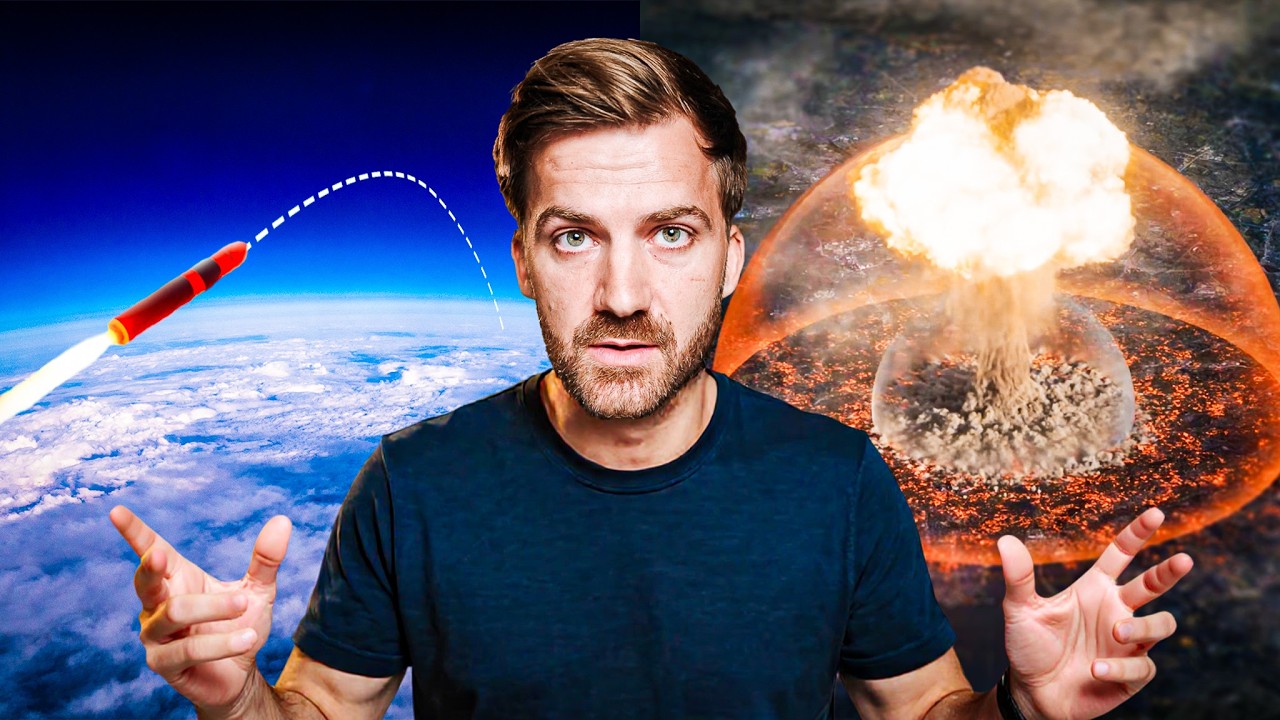
Nukes are way scarier than you think
Source: YouTube · Johnny Harris · published Jul 24, 2025 · 46:34
This video explains how nuclear weapons work and their role in global politics through the lens of deterrence 0:10.
Key Takeaways:
• Nuclear weapons release enormous energy through E=mc², converting tiny amounts of matter into massive energy 7:23
• Modern thermonuclear weapons use a three-stage process involving fission and fusion reactions 17:02
• Nuclear deterrence relies on credible threats, second-strike capability, and intentionally vague red lines 23:25
• The Ukraine conflict demonstrates how nuclear threats shape real-world geopolitical decisions 30:05
• Taiwan represents one of the world's most dangerous potential nuclear flashpoints between China and the US 37:22
Despite their destructive power, nuclear weapons continue to play a central role in maintaining global stability through deterrence 42:20.
Sources:
Generate CPE Credits
Generate a professional CPE document from this video's transcript.
Estimated credit: 1 CPE hours
Estimate uses the video runtime (1 hour ≈ 1 CPE, rounded to the nearest 0.5, minimum 0.5, maximum 2.0). The final amount can be lower after review, never higher.
Topic: Cybersecurity. Commonly maps to: Security and Risk Management, Security Operations. Exact CISSP domains are assigned during generation.
Free account. One generation at a time, with a daily limit.
CPEBuddy is independent and not affiliated with or endorsed by ISC2, ISACA, or any certification body. Exports are formatted for common CPE submissions; acceptance is at your certification body's discretion.
Transcript Preview
First 800 characters of the transcript
(plane engine roaring) - I'm in Washington, DC right now, and I want to visualize for
you what it would look like if a nuclear weapon landed
on the nation's capital. So, for our scenario,
there is a nuclear weapon headed towards the city right now. (dramatic music) A large nuclear weapon flying headed towards Washington, DC. The actual bomb is actually in here. This cone that's about
two meters tall, six feet. It's falling back into the atmosphere. Here it comes. And then, for a moment, right here
is the hottest thing in our solar system, hotter than the sun. 100 million degrees
Celsius as it expands out. Everything around it turns into dust. I mean, smaller than dust. Atoms are ripped apart. This fireball instantly
vaporizes everything within a half a mile radius. And here comes the blast…