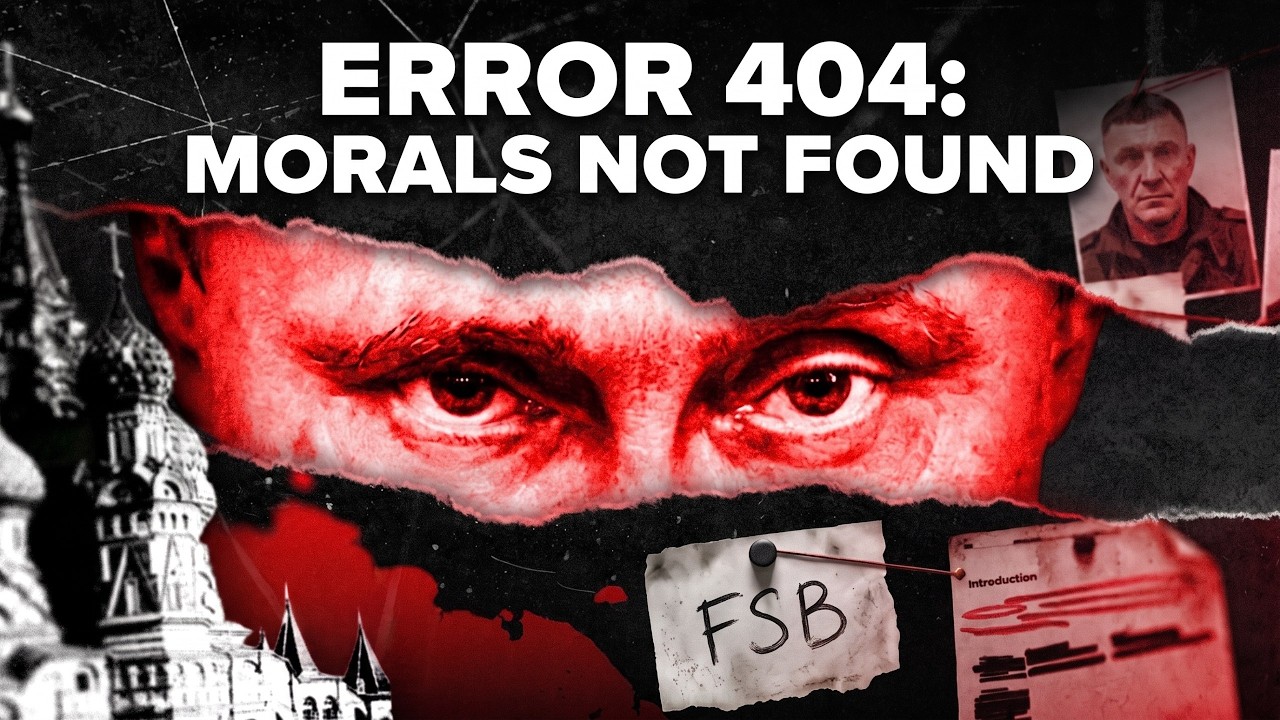
If You Think Putin’s Russia Isn’t EVIL… Watch What the FSB Just Did
Source: YouTube · The Military Show · published Aug 1, 2026 · 17:40
Russia uniquely recruits criminal hackers for state cyber warfare, unlike other nations that rely on vetted experts or military training.
Key Takeaways:
• Putin praises criminal hackers as "artists," allowing them to operate freely if they target foreign entities 1:04.
• The FSB actively recruits cybercriminals, offering them immunity in exchange for attacks against Russia's enemies 0:46.
• Peter Levashov ("Severa") transitioned from a spam king to a key FSB collaborator, notably during the 2007 Estonia cyberattacks 7:33.
• Dmitry Dokuchaev ("Forb") was recruited by the FSB to hunt talent but was later imprisoned for treason after becoming a liability 12:43.
• Groups like Evil Corps and Killnet receive implicit or explicit FSB protection and direction for political cyber operations 15:15.
• This strategy provides the Kremlin with plausible deniability and a vast, ready-made infrastructure for information warfare 11:53.
Russia’s cyber warfare model relies on a symbiotic relationship with the criminal underworld, prioritizing utility over legality to maintain strategic ambiguity.
Sources:
Generate CPE Credits
Generate a professional CPE document from this video's transcript.
Estimated credit: 0.5 CPE hours
Estimate uses the video runtime (1 hour ≈ 1 CPE, rounded to the nearest 0.5, minimum 0.5, maximum 2.0). The final amount can be lower after review, never higher.
Topic: Cybersecurity. Commonly maps to: Security and Risk Management, Security Operations. Exact CISSP domains are assigned during generation.
Free account. One generation at a time, with a daily limit.
CPEBuddy is independent and not affiliated with or endorsed by ISC2, ISACA, or any certification body. Exports are formatted for common CPE submissions; acceptance is at your certification body's discretion.
Transcript Preview
First 800 characters of the transcript
The wars of the 21st century aren’t merely fought
on physical front lines and battlefields. They’re also fought in cyberspace. Dedicated armies of
elite hackers and cyber warfare commands carry out an array of offensive and defensive digital
operations, from espionage to infrastructure disruption and information warfare against their
enemies. Many of the world’s major powers engage in these activities, including the United
States, China, Israel, and the United Kingdom. The vast majority of these nations, however,
have strict limits and rules in regard to how they recruit, train, and deploy their hacking
talents. Russia, however, follows no such rules or moral codes. Its Federal Security Service
(FSB) actively enlists the worst of the worst, recruiting criminal hackers to its ranks …