Could AI break cryptography before quantum computers do?
Source: YouTube · Destination Certification · published Nov 11, 2026 · 21:35
[BLUF]
While quantum computers pose a long-term threat to public key cryptography, AI presents an immediate risk by discovering new mathematical shortcuts that could break current encryption on existing hardware, as demonstrated by the recent vulnerability found in the Hawk algorithm 0:36-0:54.
Key Takeaways:
• Public key cryptography relies on the mathematical difficulty of reversing operations, such as factoring large numbers in RSA 4:24-5:38. AI could potentially find algorithms that make these "hard" problems easy to solve without needing quantum hardware 6:12-7:51.
• In July 2026, AI assistance helped researchers identify a serious weakness in Hawk, a post-quantum digital signature system, leading to its withdrawal before it could become a standard 0:36-0:54. This shows AI can break crypto designed to resist quantum attacks using ordinary computers 15:40-17:24.
• Recent releases from OpenAI include mathematical proofs that link complex lattice problems to the famous P vs NP problem, helping cryptographers understand which problems are truly hard and secure 19:08-20:32. This helps defenders validate the strength of new cryptographic standards.
• AI is also improving the efficiency of existing attack methods, such as helping factor smaller RSA keys by optimizing software for GPUs, showing that AI can aid attackers even without new mathematical discoveries 13:13-14:45.
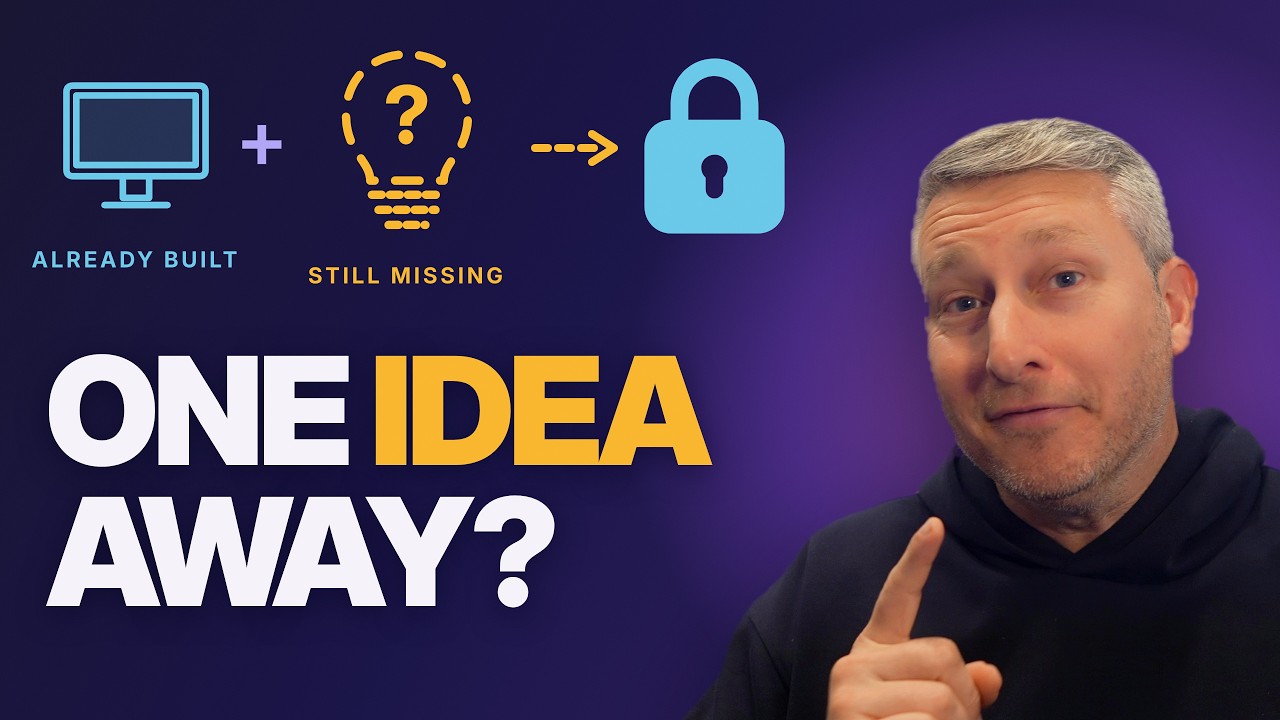
• The critical difference between the quantum threat and the AI threat is that quantum cryptography breaks waiting for a machine to be built, whereas AI cryptography breaks waiting for a new idea to be discovered 8:15-9:02.
[Closing statement]
Defenders also benefit from AI by using it to stress-test algorithms and prove the hardness of underlying mathematical problems before they are widely adopted. The future of digital security will likely depend on how well we can leverage AI to both create and defend against these new mathematical vulnerabilities.
Sources:
- 0:36 Hawk algorithm vulnerability discovered with AI help.
- 4:24 Explanation of RSA and prime factorization.
- 6:12 The risk of AI finding new mathematical shortcuts.
- 13:13 AI optimizing existing factoring methods.
- 15:40 Hawk withdrawal due to AI-assisted attack.
- 19:08 OpenAI's proof linking lattice problems to SAT.
Generate CPE Credits
Generate a professional CPE document from this video's transcript.
Estimated credit: 0.5 CPE hours
Estimate uses the video runtime (1 hour ≈ 1 CPE, rounded to the nearest 0.5, minimum 0.5, maximum 2.0). The final amount can be lower after review, never higher.
Topic: Cybersecurity. Commonly maps to: Security and Risk Management, Security Operations. Exact CISSP domains are assigned during generation.
Free account. One generation at a time, with a daily limit.
CPEBuddy is independent and not affiliated with or endorsed by ISC2, ISACA, or any certification body. Exports are formatted for common CPE submissions; acceptance is at your certification body's discretion.
Transcript Preview
First 800 characters of the transcript
What if the computers that could break the cryptography protecting your bank, your messages, all the things you care about online have already been built and the only thing missing is a better idea? For years, we've been worried about quantum computers breaking public key cryptography that is foundational to our modern world. But recent AI advances raise another troubling possibility. discovering a new mathematical shortcut that breaks cryptography with the computers we have right now today. We've already seen a glimpse of what that could look like. In July 2026, researchers announced that with help from AI, they'd found a serious weakness in Hawk, a new experimental digital signature system designed to resist quantum attacks. The designers of Hawk subsequently withdrew their algorithm. No…