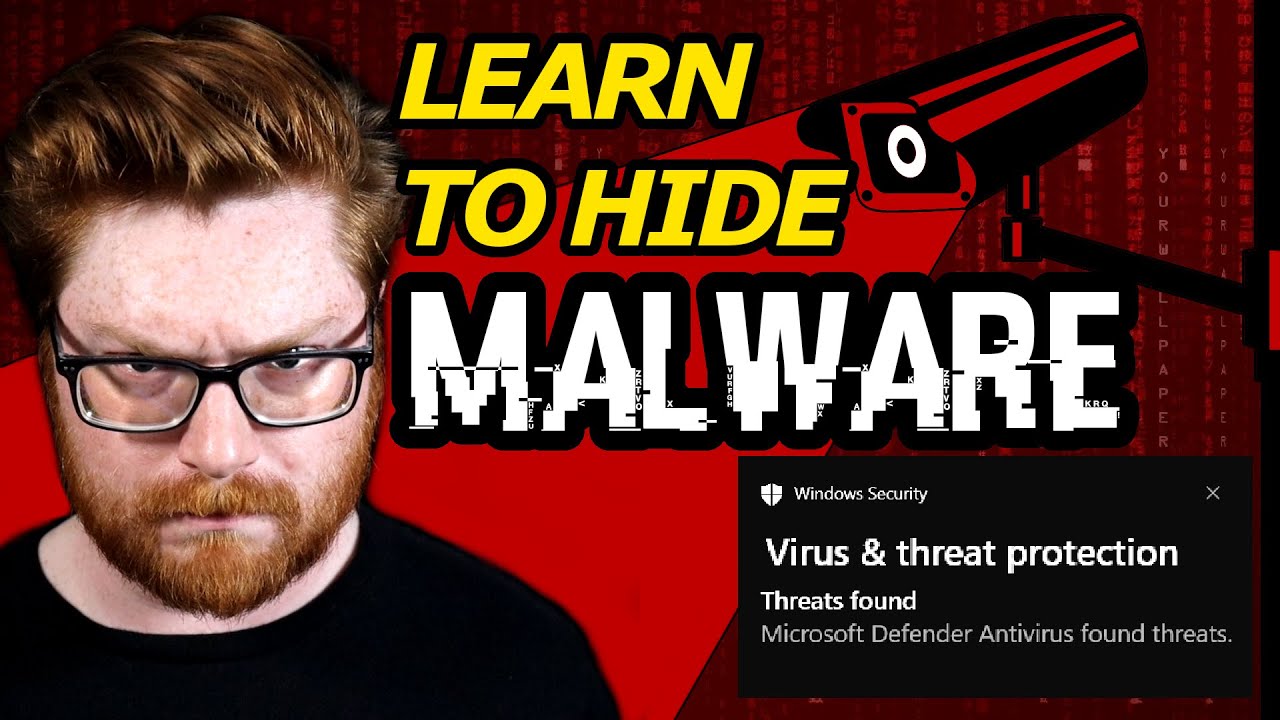
How Does Malware Know It's Being Monitored?
Source: YouTube · John Hammond · published Aug 24, 2023 · 17:19
The video explains how malware evades analysis by detecting debuggers, using techniques ranging from simple API calls to complex PEB manipulation, to ensure payload execution only occurs in a safe environment 0:00 6:02.
Key Takeaways:
• Malware can use the simple IsDebuggerPresent Windows API to check for a debugger and immediately exit if one is found 6:02.
• Another method involves scanning for known security tools by name, such as x64dbg or Procmon, and skipping execution if they are detected 8:33.
• A more robust approach involves reading the BeingDebugged flag directly from the Process Environment Block (PEB) using system register pointers like GS, avoiding direct API calls 9:40.
• These custom implementations allow the malicious program to successfully execute its payload on a live system while bypassing standard security research tools 15:15.
Security professionals need to understand these evasion strategies to better defend against and analyze modern malware.
Sources:
Generate CPE Credits
Generate a professional CPE document from this video's transcript.
Estimated credit: 0.5 CPE hours
Estimate uses the video runtime (1 hour ≈ 1 CPE, rounded to the nearest 0.5, minimum 0.5, maximum 2.0). The final amount can be lower after review, never higher.
Topic: Cybersecurity. Commonly maps to: Security and Risk Management, Security Operations. Exact CISSP domains are assigned during generation.
Free account. One generation at a time, with a daily limit.
CPEBuddy is independent and not affiliated with or endorsed by ISC2, ISACA, or any certification body. Exports are formatted for common CPE submissions; acceptance is at your certification body's discretion.
Transcript Preview
First 800 characters of the transcript
when malware runs on a computer it always has a goal in mind it has a purpose to carry out these actions on objectives whether it's to move laterally throughout the network or escalate privileges to become an admin user or just get a callback so the hacker can maintain access or install persistence but defensive security tools get in the way things like antivirus or EDR endpoint detection response think of sandboxes or tools that can analyze the malware's behavior so the computer can determine if this program is good or malicious software but you know a lot of malware can bypass these defenses or circumvent it or get around it and hide under the radar so it begs the question how does malware know when it's being monitored in this video I want to show you some anti-debugging techniques so m…