Something is jamming GPS over Europe. Here's what we found
Source: YouTube · Veritasium · published Jun 5, 2026 · 34:10
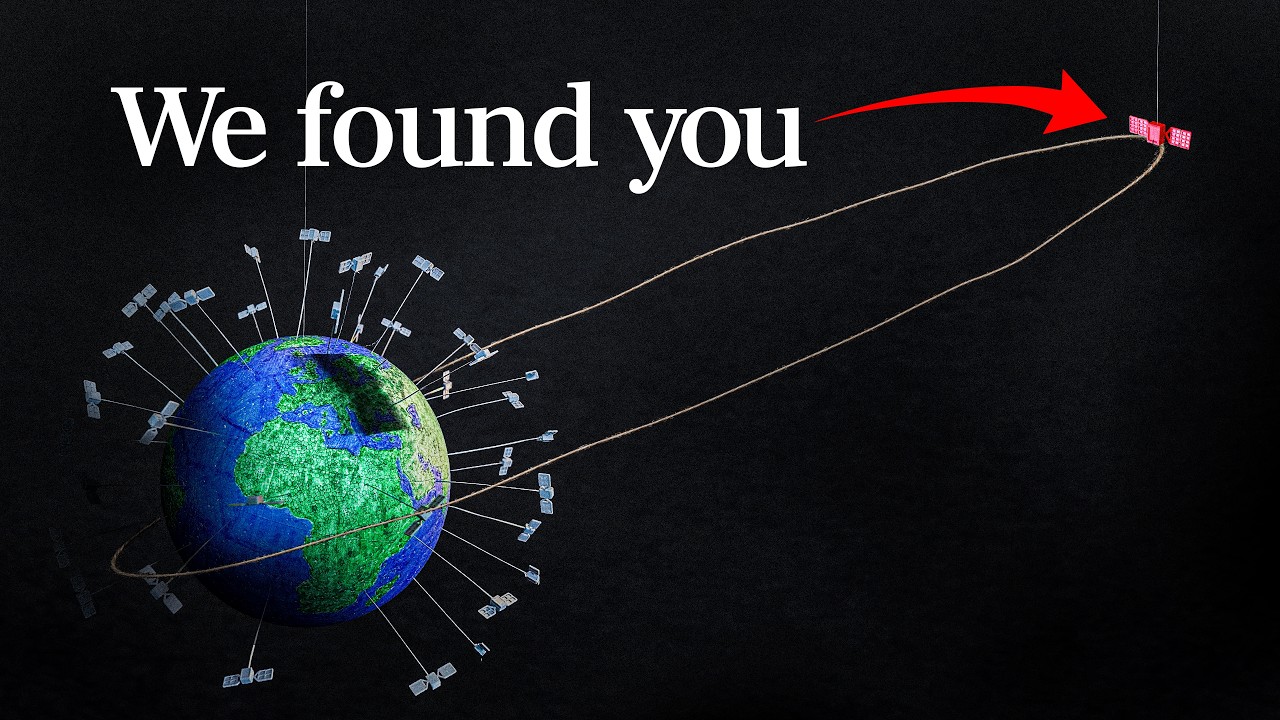
GPS expert Professor Todd Humphreys and his student investigated a 2021 public dataset based on a mysterious tip and discovered a simultaneous, coordinated anomaly across a network of GPS monitoring stations 0:00.
Key Takeaways:
• In November 2024, Professor Todd Humphreys of the University of Texas at Austin received a tip directing him to examine specific times within a public dataset collected years earlier 0:00.
• The dataset was generated by a network of stations that continuously record the strength of satellite navigation signals relative to background noise 0:18.
• Although the 2021 data was publicly available and assumed to be thoroughly reviewed, it contained a previously unnoticed anomaly 0:27.
• Following the tip's exact coordinates, Humphreys and his student Zach Clements found that at one precise moment, receivers across the entire network reported the exact same unusual phenomenon 0:36.
This unexpected discovery in seemingly ordinary public data highlights the potential for uncovering hidden, synchronized events within global satellite navigation systems 0:44.
Sources:
Generate CPE Credits
Generate a professional CPE document from this video's transcript.
Estimated credit: 0.5 CPE hours
Estimate uses the video runtime (1 hour ≈ 1 CPE, rounded to the nearest 0.5, minimum 0.5, maximum 2.0). The final amount can be lower after review, never higher.
Topic: Cybersecurity. Commonly maps to: Security and Risk Management, Security Operations. Exact CISSP domains are assigned during generation.
Free account. One generation at a time, with a daily limit.
CPEBuddy is independent and not affiliated with or endorsed by ISC2, ISACA, or any certification body. Exports are formatted for common CPE submissions; acceptance is at your certification body's discretion.
Transcript Preview
First 800 characters of the transcript
- In November 2024,
Professor Todd Humphreys, a GPS expert at the
University of Texas at Austin, got a mysterious tip-off. Look at two specific days, at exact times in a data
set collected years earlier by a network of GPS monitoring stations. These stations continuously record signals from satellite navigation systems, measuring how strong they are
relative to background noise. It didn't seem promising. The data was from 2021, and it was publicly available online. So surely if something
unusual was in there, someone would have already found it. But Professor Humphreys and his
student Zach Clements looked into the data at the two
specific times suggested, and they discovered something surprising. At one precise moment, receivers across the network
all reported the same thing, a sudden drop…