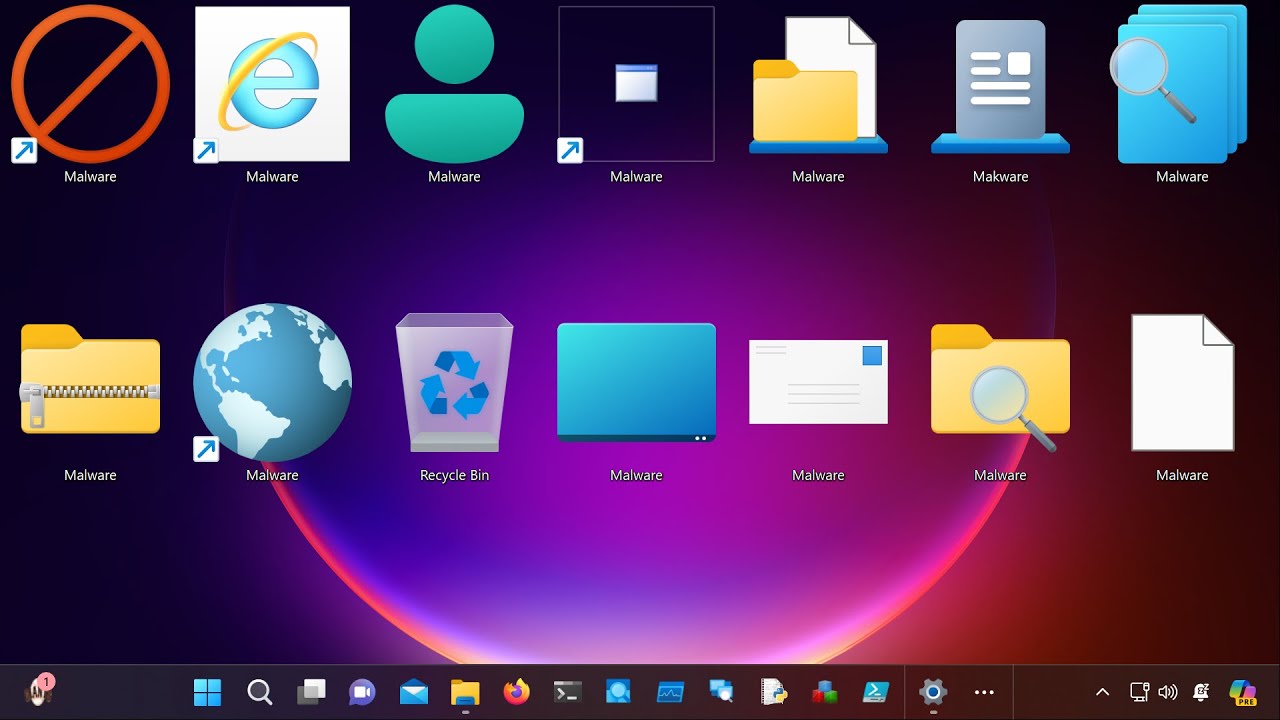
These Files Don't Show Their Extension
Source: YouTube · John Hammond · published May 8, 2024 · 41:28
The video demonstrates 16 Windows file types that hide their extensions even when the "view file name extensions" setting is enabled, which can be exploited for social engineering in cybersecurity operations 0:00-0:34.
Key Takeaways:
• .lnk files (Windows shortcuts) hide their extensions by default, making them useful for deception 0:49-1:03
• .scf files (Shell Command files) can be weaponized for credential gathering attacks 1:07-1:36
• .pif files (Program Information Files) are legacy Windows shortcuts that also hide extensions 1:42-2:56
• The registry key "never show extension" controls this behavior for all file types 34:00-37:03
This knowledge can be used by both red teamers for creating deceptive files and defenders for detecting potential threats 0:24-0:37.
Sources:
- 0:00-0:34 Introduction to 16 file types that hide extensions
- 0:24-0:37 Potential uses for social engineering and cybersecurity
- 0:49-1:03 Windows shortcut (.lnk) files
- 1:07-1:36 Shell Command (.scf) files
- 34:00-37:03 Registry key explanation for extension hiding behavior
Generate CPE Credits
Generate a professional CPE document from this video's transcript.
Estimated credit: 0.5 CPE hours
Estimate uses the video runtime (1 hour ≈ 1 CPE, rounded to the nearest 0.5, minimum 0.5, maximum 2.0). The final amount can be lower after review, never higher.
Topic: Cybersecurity. Commonly maps to: Security and Risk Management, Security Operations. Exact CISSP domains are assigned during generation.
Free account. One generation at a time, with a daily limit.
CPEBuddy is independent and not affiliated with or endorsed by ISC2, ISACA, or any certification body. Exports are formatted for common CPE submissions; acceptance is at your certification body's discretion.
Transcript Preview
First 800 characters of the transcript
these are 16 file types that don't show their file extension on the Windows desktop or file explorer even when the Explorer setting to view file name extensions is toggled on and that's something that you maybe as a red teamer penetration tester ethical hacker or a Defender hey cyber security practitioner working to detect new threats this might be something that's a worthwhile trick to be used for social engineering or some trickery and deception to fool an end user or victim into clicking on something that will offer a little bit more code execution persistence whatever the case may be you can get creative and have your imagination sort of run wild with this if you'd like but let's say I just created a new text document from quick and easy rightclick Windows desktop I can make this whate…