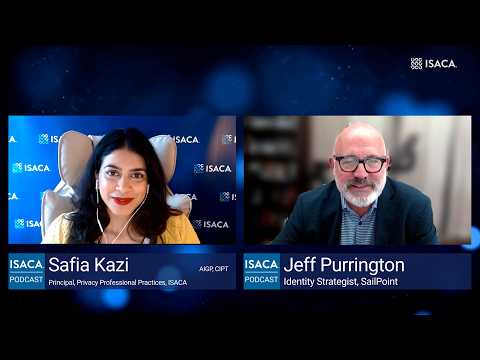
The New Rules of Governance: Achieving Continuous Compliance with Adaptive Identity
BLUF:
Traditional periodic audits are failing to keep pace with the proliferation of ephemeral AI agents and non-human identities, necessitating a shift toward adaptive identity frameworks and continuous compliance 2:15. Organizations must prioritize comprehensive discovery and real-time, event-based controls to govern this new "agentic economy" effectively 5:46.
Key Takeaways:
- The Limitations of Point-in-Time Auditing: Annual audits are becoming obsolete because they assume a stable population of identities, whereas modern ecosystems feature ephemeral AI agents that may exist for only minutes, creating "methodology gaps" in traceability 4:12.
- Discovery is the Critical Denominator: Security leaders must prioritize the complete discovery of non-human identities, including those created on endpoints, because you cannot govern or classify what you cannot see 20:02.
- Shift to Just-in-Time Access: To reduce the blast radius of compromised identities, organizations should move away from standing privileges toward just-in-time, activity-bound access that is revoked immediately upon task completion 14:05.
- Identity as a Real-Time Control Plane: Adaptive identity systems act as a control plane by integrating shared signals from threat detection to intervene in risky actions in real-time, rather than relying on post-event detective controls 13:52.
- Data Classification and Ownership: Effective governance requires automated classification of unstructured data across collaboration tools and clear ownership of AI agent lifecycles to ensure accountability and appropriate access treatment 29:50.
Closing Statement:
Adopting adaptive identity is not merely a technical upgrade but a cultural shift requiring cross-functional collaboration to dismantle silos and establish real-time governance. By focusing on discovery and event-based monitoring, organizations can build a future-proof security posture that satisfies rigorous compliance demands in the era of AI.
Sources:
- 2:15 Definition of adaptive identity and its application to non-human identities.
- 4:12 Explanation of why periodic audits fail against ephemeral AI agents.
- 5:46 The necessity of continuous compliance over point-in-time testing.
- 13:52 The concept of identity acting as a real-time control plane.
- 14:05 Benefits of just-in-time provisioning and zero standing privileges.
- 20:02 The critical importance of discovery as the foundation for all other metrics.
Transcript Preview
The digital landscape is shifting fast. [music] For every human identity you govern, dozens of non-human ones, bots, [music] automated workloads, and now autonomous AI agents are interacting with your data every second. [music] Can you confidently prove they are all compliant? Traditional identity programs weren't built for this speed or [music] scale, leaving massive blind spots in your audit trail. That's where Sailpoint comes in. They're helping organizations secure the new era of identity. [music] Instead of relying on static reactive rules, Sailpoint infuses AIdriven intelligence into the very fabric [music] of your security program for an adaptive identity approach. They provide a single dynamic view of identities in your ecosystem, [music] human, machine, or AI agent. Sailpoint anti…
Generate CPE Credits
Generate a professional CPE document from this video's transcript.