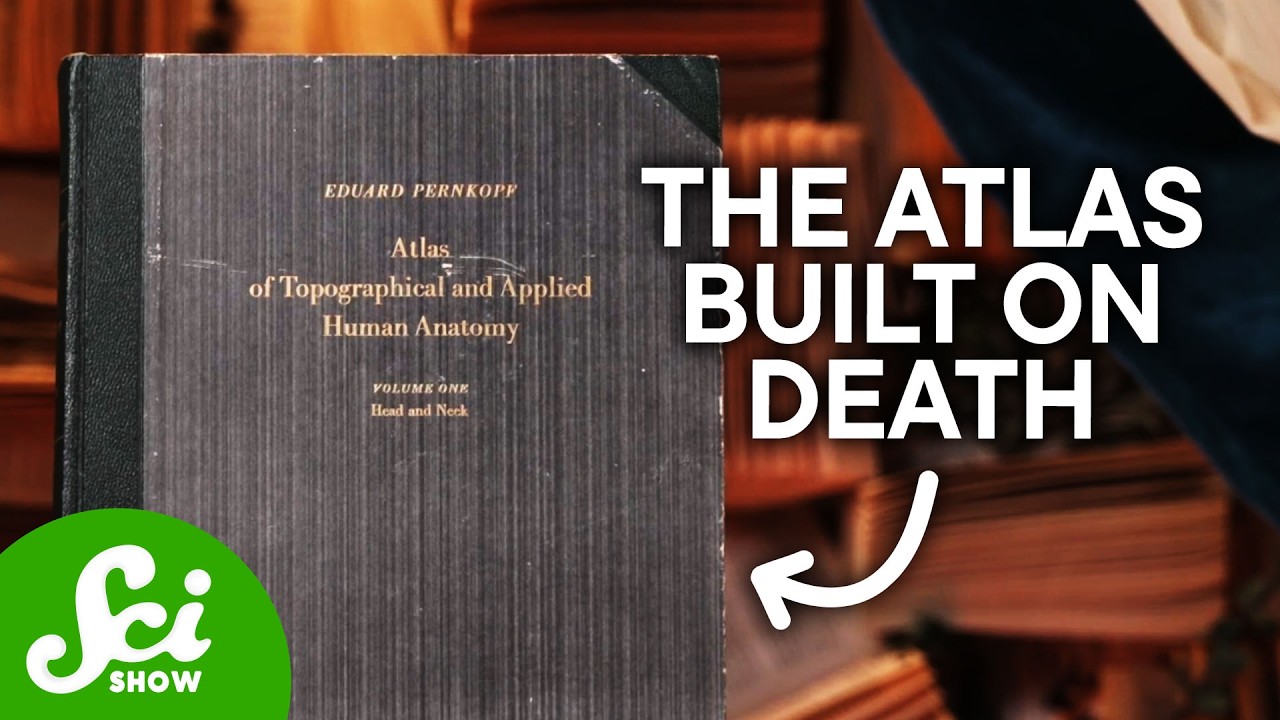
The Pernkopf Atlas: Medicine's Most Controversial Book
Source: YouTube · SciShow · published Jan 29, 2026 · 56:50
Revised Summary
The Pernkopf Atlas is a highly detailed anatomy textbook created by Nazi anatomist Eduard Pernkopf and his team between 1933 and 1960. While renowned for its exceptional anatomical illustrations and still used by some surgeons today, the atlas has a controversial origin: it was created using the bodies of executed prisoners, including at least 1,337 political prisoners executed under expanded Nazi capital punishment laws.
The video explores the historical context of anatomical research, demonstrating how the exploitation of vulnerable populations for medical study dates back centuries. From ancient civilizations to European anatomists who used bodies of criminals and the poor, the history of anatomy is intertwined with ethical questions about consent and power.
Despite the atlas's artistic and scientific value, its use remains controversial. Some doctors still reference it for its unparalleled detail in areas like peripheral nerve and head-and-neck anatomy, while others refuse to use it due to its origins. The video examines this ethical dilemma, including perspectives from religious leaders and medical professionals.
The story concludes with discussion of the Amara Yad project, an initiative to create ethically sourced anatomical resources that may eventually replace the Pernkopf Atlas. This effort represents a broader commitment to acknowledge past injustices while creating better alternatives for future medical education.
Generate CPE Credits
Generate a professional CPE document from this video's transcript.
Estimated credit: 1 CPE hours
Estimate uses the video runtime (1 hour ≈ 1 CPE, rounded to the nearest 0.5, minimum 0.5, maximum 2.0). The final amount can be lower after review, never higher.
Topic: Cybersecurity. Commonly maps to: Security and Risk Management, Security Operations. Exact CISSP domains are assigned during generation.
Free account. One generation at a time, with a daily limit.
CPEBuddy is independent and not affiliated with or endorsed by ISC2, ISACA, or any certification body. Exports are formatted for common CPE submissions; acceptance is at your certification body's discretion.
Transcript Preview
First 800 characters of the transcript
This is a story about death. From 1938 to 1945, thousands
of Austrians were executed. Some were political prisoners,
others were petty criminals, and still more were disabled children. Their bodies were given to medical schools, where doctors and students pored over
the inner workings of their every organ. This is a story about ambition. Around the same time, a team of
Nazi artists and dissectors were working on one of the most comprehensive
anatomy textbooks of all time, using some of those same bodies. It’s called the Pernkopf Atlas. And its illustrations were so detailed
that some surgeons consider them the best that have ever been
created, and still use them today. This is a story about medicine. The anatomical work of the Pernkopf
team was built on a foundation, centuries old,…