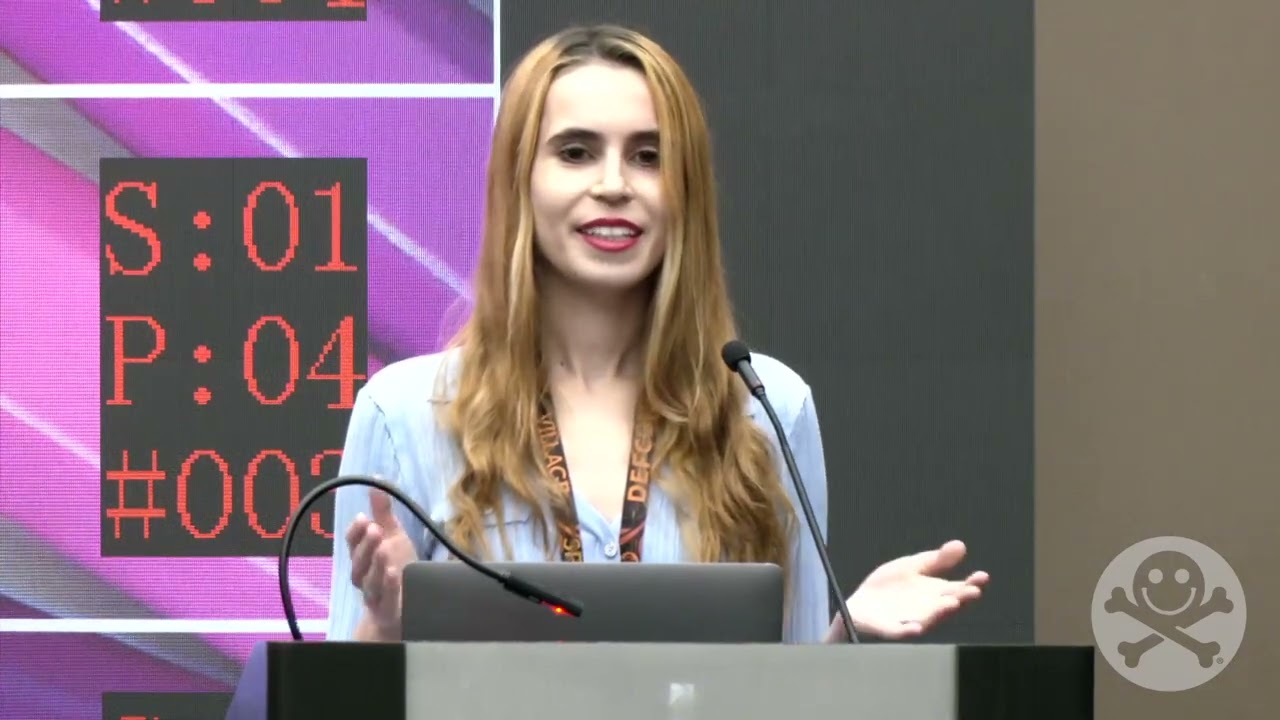
DEF CON 33 - QRAMM: The Cryptographic Migration to a Post Quantum World - Emily Fane, Abdel Sy Fane
Source: YouTube · DEFCONConference · published Oct 10, 2025 · 22:27
Summary
Quantum computing threatens current public key cryptography, and organizations must prepare now by implementing postquantum solutions before quantum computers can break existing encryption systems [1:36-2:23].
Key Takeaways:
• Quantum computing uses qubits that can exist in superpositions of 0 and 1, leveraging quantum properties to perform computations differently than classical computers [0:12-0:55]
• Shor's algorithm on quantum computers can break RSA, Diffie-Hellman, and elliptic curve cryptography, rendering most current public key systems obsolete [1:36-2:23]
• NIST has standardized postquantum cryptography algorithms like crystals Dilithium (digital signatures) and Kyber (key exchange) to replace vulnerable classical algorithms [3:55-4:33]
• Organizations need to start transitioning to postquantum cryptography by 2030 with full transition by 2035 due to "harvest now, decrypt later" attacks where adversaries collect encrypted data [5:13-5:45]
• The QM framework helps organizations assess their quantum readiness across four dimensions: cryptographic visibility, strategic governance, data protection, and implementation readiness [7:01-9:28]
The transition to postquantum cryptography requires immediate action to inventory cryptographic assets, establish crypto agile architecture, and begin implementing hybrid solutions before quantum computers can break current encryption systems.
Sources:
Generate CPE Credits
Generate a professional CPE document from this video's transcript.
Estimated credit: 0.5 CPE hours
Estimate uses the video runtime (1 hour ≈ 1 CPE, rounded to the nearest 0.5, minimum 0.5, maximum 2.0). The final amount can be lower after review, never higher.
Topic: Cybersecurity. Commonly maps to: Security and Risk Management, Security Operations. Exact CISSP domains are assigned during generation.
Free account. One generation at a time, with a daily limit.
CPEBuddy is independent and not affiliated with or endorsed by ISC2, ISACA, or any certification body. Exports are formatted for common CPE submissions; acceptance is at your certification body's discretion.
Transcript Preview
First 800 characters of the transcript
for the transition to postquantum cryptography the QM framework and finally how organizations can prepare. So first the quantum error. So quantum computing is this type of computing that harnesses properties of quantum physics. So instead of using a bit which could be zero or one, it uses a quantum bit or cubit which can be any combination or superposition of zero and one. And basically a cubit is a two-level quantum system. So that could be where zero is the ground state, one is the excited state. That could be horizontal or vertical polarization of light. Really a two-level system is a quantum bit. And quantum computing also takes advantage of entanglement, which is where two or more cubits are linked so that if you affect one cubit, it instantly affects the other cubit, even if they're …