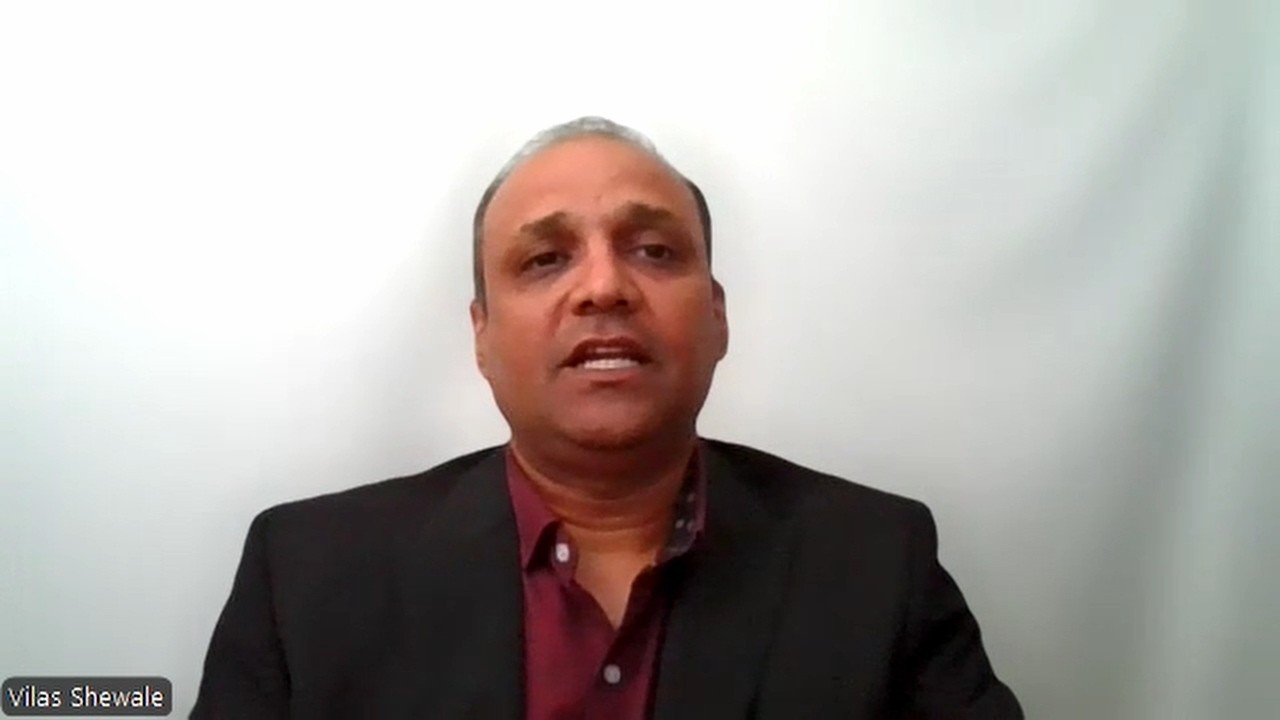
Has Your Trust Been Verified? | Vilas Shewale | TEDxWisdom World School Amanora
Source: YouTube · TEDx Talks · published Aug 31, 2026 · 16:09
BLUF: Cybersecurity expert Bulash Shawari argues that traditional perimeter defense is obsolete, advocating for a "Zero Trust" model where no entity is trusted by default, to prevent catastrophic failures in critical infrastructure like power grids and pipelines 2:15.
Key Takeaways:
• Historical attacks on Ukraine’s power grid and the Colonial Pipeline demonstrate that hackers often succeed by exploiting blind trust in internal networks rather than using complex exploits 1:30.
• The core flaw in legacy security is the assumption that anything inside the network perimeter is safe, a mindset that allowed attackers to move laterally after initial compromise 6:00.
• Zero Trust requires verifying every access request continuously, regardless of origin, implementing measures like multi-factor authentication (MFA) and network segmentation 8:19.
• Individuals and organizations must question default assumptions about vendors, employees, and devices, asking "why" trust is granted rather than assuming it based on history 9:53.
• Security is everyone’s responsibility; cultural change happens when individuals actively verify trust and push back against insecure defaults 12:46.
Embracing Zero Trust is not just a technical adjustment but a fundamental shift in mindset that protects critical systems by verifying identity and context continuously. By questioning defaults and making security a collective responsibility, we can prevent the next major infrastructure crisis.
Sources:
- 1:30 Discussion of the 2015 Ukraine power grid hack as a real-world example of infrastructure vulnerability.
- 2:15 Analysis of the Colonial Pipeline ransomware attack, highlighting how a single compromised password led to widespread disruption.
- 6:00 Explanation of the flawed assumption that internal network presence guarantees safety.
- 8:19 Definition of Zero Trust principles, including continuous verification and segmentation.
- 9:53 Advice on questioning default trust in vendors and systems.
- 12:46 Emphasis on making security a shared responsibility across all levels of an organization.
Generate CPE Credits
Generate a professional CPE document from this video's transcript.
Estimated credit: 0.5 CPE hours
Estimate uses the video runtime (1 hour ≈ 1 CPE, rounded to the nearest 0.5, minimum 0.5, maximum 2.0). The final amount can be lower after review, never higher.
Topic: Identity & Access Management. Commonly maps to: Identity and Access Management (IAM), Security Architecture and Engineering. Exact CISSP domains are assigned during generation.
Free account. One generation at a time, with a daily limit.
CPEBuddy is independent and not affiliated with or endorsed by ISC2, ISACA, or any certification body. Exports are formatted for common CPE submissions; acceptance is at your certification body's discretion.
Transcript Preview
First 800 characters of the transcript
[music] [applause] Hello everyone. How are you doing today? First I would like to thank TEDex team for giving me this opportunity today to share my knowledge with you as industry expert on cyber security. Thank you everyone who joined in today's session and those who will be watching it later. I'm Bulash Shawari and I hold master's degree in computer science from Pune University with over 25 years of experience in IT industry. I have worked across various roles and responsibilities. Currently I am in Houston, Texas and I serve as a principal at Energy Transfer, one of the largest midstream pipeline operators in United States for oil and gas transportation. What if tomorrow morning you woke up and there is no electricity? Not because of storm or maintenance, but because your electricity gri…