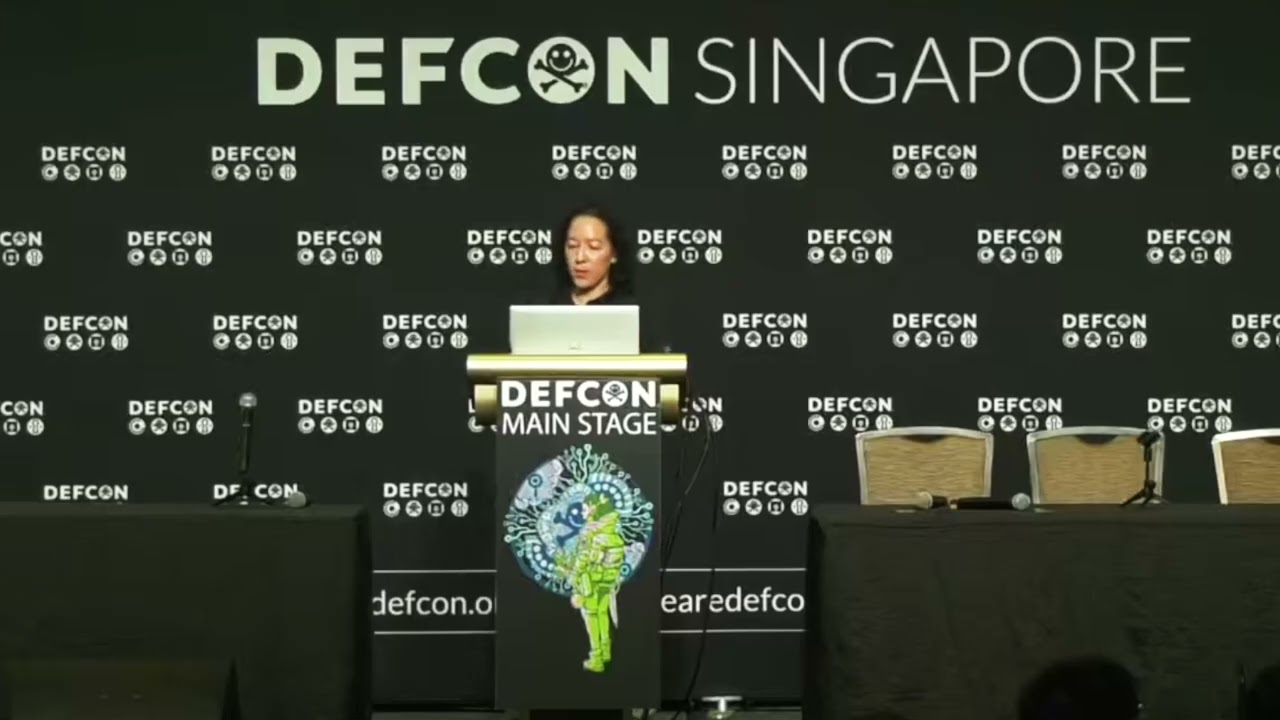
DSCG1 - Attack and Defense of AI Enabled Systems - Hahna Latonick
Source: YouTube · DEFCONConference · published Sep 30, 2026 · 15:15
BLUF: This presentation outlines the critical vulnerabilities in AI-enabled uncrewed systems and proposes a multi-layered defense strategy combining adversarial training, secure infrastructure, and continuous authorization frameworks to mitigate emerging threats 0:56.
Key Takeaways:
• The integration of AI into military uncrewed systems is rapidly shifting warfare dynamics, with recent drone swarm incidents in the US, Ukraine, and the Middle East demonstrating both the promise and peril of this technology 1:09.
• Adversarial attacks expand the attack surface of these systems, including sensor spoofing to mislead navigation, input deception to corrupt decision-making, data poisoning, and model extraction 3:57.
• Defensive strategies must include adversarial training to improve model robustness, explainable AI to identify biases, and strict physical security to prevent tampering with edge devices 6:25.
• Effective defense also requires AI-driven cybersecurity for anomaly detection, predictive analytics, and counter-UXS technologies like jamming or directed energy weapons to neutralize malicious platforms 8:03.
• Current AI limitations include data dependency, struggles with edge cases, and integration challenges, necessitating a shift from static to ongoing authorization processes for government deployment 9:40.
• Organizations should leverage NIST AI Risk Management Frameworks (AI 100-1 and 600-1) and the Dark Wolf AI Capabilities Authorization Approach to navigate complex regulatory and security requirements 11:10.
Closing Statement: As AI becomes integral to national security, defending these systems requires a paradigm shift toward continuous monitoring, robust adversarial defenses, and adaptive regulatory compliance.
Sources:
- 0:56 Introduction to the inflection point of AI in warfare and global security implications.
- 1:09 Real-world examples of drone swarms and asymmetric deterrence in modern conflicts.
- 3:57 Detailed explanation of adversarial attacks including sensor spoofing and data poisoning.
- 6:25 Practical defensive strategies such as adversarial training and physical security measures.
- 8:03 Use of AI-driven cybersecurity and counter-UXS technologies for threat mitigation.
- 9:40 Limitations of AI systems and the need for dynamic authorization processes.
- 11:10 Overview of NIST frameworks and the AI Capabilities Authorization Approach for compliance.
Generate CPE Credits
Generate a professional CPE document from this video's transcript.
Estimated credit: 0.5 CPE hours
Estimate uses the video runtime (1 hour ≈ 1 CPE, rounded to the nearest 0.5, minimum 0.5, maximum 2.0). The final amount can be lower after review, never higher.
Topic: Cybersecurity. Commonly maps to: Security and Risk Management, Security Operations. Exact CISSP domains are assigned during generation.
Free account. One generation at a time, with a daily limit.
CPEBuddy is independent and not affiliated with or endorsed by ISC2, ISACA, or any certification body. Exports are formatted for common CPE submissions; acceptance is at your certification body's discretion.
Transcript Preview
First 800 characters of the transcript
Okay, hi everyone. Now, I'll like to introduce Hana. And he'll be the speaker at the main stage. She'll be talking about the defense of AI enabled system. And let's welcome her. >> Good afternoon, everyone. I'm Hana Ken Latonic. I currently serve as the head of research and development at Dark Wolf, and I'm delighted to be here today to discuss the attack and defense of AI enabled systems. Also, this is my first DEF CON main stage presentation, so I'm extra excited to be here today. We're at an inflection point where the theoretical potential of AI in warfare is rapidly becoming a tangible reality with profound implications for global security. We're no longer talking about hypothetical scenarios. Real-world events are demonstrating both the promise and the peril of this technology. Consid…